Compost, Leaf Mould and Mulch: Three Different Jobs
Compost, leaf mould and mulch serve different garden tasks. Learn which material suits planting, soil improvement or surface cover, and how to choose.
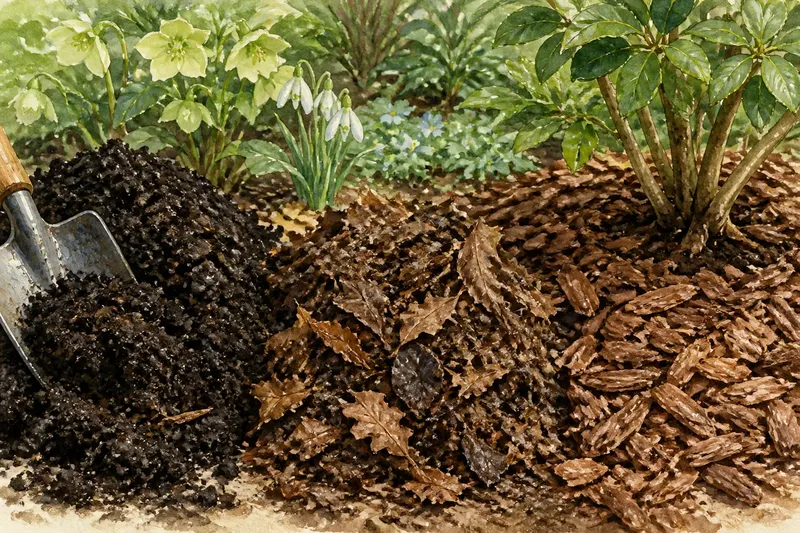
At the edge of a border, a barrow of dark compost can look much like a pile of old leaves or a layer of bark. Yet compost, leaf mould and mulch answer different needs: compost feeds and improves soil, leaf mould lends it a gentle organic texture, and mulch covers its surface. Choosing by the job makes it easier to use each material where it can help.
What is each material meant to do?
Compost is decomposed organic matter, often made from garden clippings and kitchen scraps. Mature compost is used as a soil amendment: it adds organic matter and can support soil structure and fertility. It is commonly mixed into a planting area or spread around established plants as a surface dressing.
Leaf mould is made chiefly from fallen leaves that have broken down over time. It is usually less nutrient-rich than garden compost, but its soft, crumbly texture makes it useful for improving the feel of soil and for potting mixes that need a leafy organic component. It is also a natural fit beneath woodland-style planting.
Mulch is a covering laid on top of the soil, not one particular ingredient. Bark, wood chips, leaf mould, compost and gravel can all be used as mulch, though their effects differ. The word describes where and how a material is applied; it does not tell you what the material is made from.
Keep the distinction simple: compost and leaf mould describe materials, while mulch describes a surface-covering role.
When does compost suit the task?
Use compost where the aim is to add organic matter to a bed or planting hole. In a new border, it can be incorporated into the soil as part of preparing the planting area. Around established plants, a layer on the surface can gradually contribute organic matter as soil organisms work through it.
Compost quality varies with its ingredients and maturity. Finished material should be dark and crumbly, without recognisable fresh scraps or a strongly sour smell. If it still contains undecomposed material, keep it in the composting process rather than placing it among delicate new plants.
Avoid treating compost as a universal planting medium. Plants have different preferences, and a dense or nutrient-rich mix may not suit every seedling, container or specialist plant. For pots, use a growing medium selected for the plants and container rather than relying on garden compost alone.
For an established border that needs organic matter, a modest surface dressing is often simpler than disturbing roots by digging.
Why choose leaf mould?
Leaf mould is especially useful when you want a leafy, fibrous material rather than a strong nutrient input. Worked into suitable soil, it can help create a more open, friable texture. As a top layer, it can also cover bare soil beneath shrubs and naturalistic planting without the sharper, more conspicuous look of coarse bark.
Leaves do not all break down at the same pace. Tough leaves may take longer to soften than thin ones, so a pile can contain both crumbly material and recognisable leaf fragments. The latter can still be used as a loose surface cover where a neat, fine finish is not essential.
Imagine a gardener with a shaded border beneath shrubs and a pile of partly broken-down leaves. They could reserve the finer material for improving the soil between plants, then use the remaining leaves as a loose cover in a less formal corner. The visible result would be a softer surface there, while the finer portion would be easier to blend into the bed.
Leaf mould is not a substitute for compost where the main aim is to provide a nutrient-rich amendment.
When is mulch the better choice?
Choose mulch when the job is to cover exposed soil. A surface layer can reduce the amount of bare ground visible, help limit moisture loss and make it harder for some weed seedlings to establish. It can also provide a deliberate finish, from the natural look of leaf mould to the crisp appearance of gravel.
Material matters. Bark and wood chips create a coarse, long-lasting-looking surface, while compost and leaf mould blend more readily into a planting scheme. Gravel is a mineral cover rather than an organic soil amendment, so it will not break down into organic matter as leaves or compost do.
Keep organic mulch clear of plant crowns and the bases of woody stems. A dense heap pressed against living growth can keep it unnecessarily damp and may encourage damage. Leave a small open ring around the plant itself.
If the priority is a finished surface, think first about texture, colour and how the cover will sit beside paths and foliage.
Which material fits which garden task?
- Preparing a planting bed: Choose mature compost when the aim is to add organic matter and improve the soil before planting.
- Softening the texture of a leafy border: Consider leaf mould, especially where a gentle, fibrous amendment is wanted.
- Covering exposed soil beneath shrubs: Use a suitable organic mulch, leaving space around stems and crowns.
- Creating a crisp, mineral surface: Gravel may fit the design, but treat it as cover rather than a source of organic matter.
- Filling containers: Select a growing medium suited to the plants; do not assume garden compost or leaf mould alone will meet their needs.
- Using partly decomposed leaves: Keep them for a loose cover or allow them to break down further before blending them into soil.
Say you are refreshing a sunny border with established perennials and a few bare spaces between them. If the soil needs organic matter, spread mature compost where it can meet the soil; if the immediate need is to cover the gaps, choose a mulch that suits the border’s appearance. The visible cover and the soil amendment need not be the same material.
How should you choose and apply them?
Start by naming the task in plain terms: amend soil, improve texture, cover bare ground or finish a surface. Then check the material itself. Bagged products should be used according to their label, and locally available materials may differ in ingredients and suitability.
Apply organic materials to soil that is not waterlogged, and avoid burying small plants under a deep blanket. For a broad bed, work in manageable sections so that stems remain visible and the material is spread evenly. If the goal is to improve soil texture, place the amendment where roots and soil organisms can interact with it; if the goal is surface cover, leave it on top.
Compost, leaf mould and mulch are not competing answers to one question. Compost suits soil enrichment, leaf mould suits a softer organic contribution, and mulch suits surface protection and presentation. Naming the job first is the simplest way to choose well.
What do gardeners often ask about these materials?
Can compost be used as mulch?
Yes, mature compost can be spread on the soil surface as an organic mulch. It will look and behave differently from coarse bark, and it can also add organic matter as it breaks down.
Is leaf mould the same as compost?
No. Leaf mould is made chiefly from decomposed leaves, while garden compost usually contains a broader mix of organic materials. Their texture and nutrient contribution can therefore differ.
Can bark mulch improve soil?
Bark protects the surface and can gradually break down, but it is not a quick substitute for an amendment mixed with soil. Use it primarily as a cover, and choose compost when the immediate task is soil improvement.
Should mulch touch plant stems?
No. Keep organic material away from crowns and woody stems rather than piling it against living growth. This leaves the base of each plant open to air and makes it easier to inspect.
When choosing compost, leaf mould and mulch, let the purpose lead and the appearance follow. A garden can use all three in different places: soil amendment where roots need it, leafy material where texture is the aim, and surface cover where bare ground needs a finish.